Table of Content
There is a very slight exception to thisrule , which is outlined in the next section under OakTreatment. In this post, we are going to walk you through how to make your own moonshine from mixing your corn mash recipe through jarring. All of the supplies youll need can be found in our shop. The best skill to focus on from the beginning is attention to detail.

Label your jars from 1-10, where every 250ml distillate leaving your condenser will be collected into individual jars. When the still reaches its highest temperature point, start collecting your distillate. Clarifying is a process that involves removing any spent grains which might scorch during distillation. A yeast starter allows the yeast to propagate on a small scale so you get a larger number of yeast cells by the time you add them into your main wash. Making a full-flavored whiskey at home is a fairly simple task. You’ll need a few store-bought ingredients and some time.
Where Can I Buy Half Whiskey Barrels
Whiskey is one of those spirits where age does matter. The wood from the barrels tends to break down the harsher flavors in the alcohol, leaving you with a smoother taste the longer it stays in there. Its the final and arguably most important step of whiskey production, but maturation in oak also provides an element of unpredictability and even magic. And yet, the only part of the process that is easily emulated is aging whiskey at home.

However, preparing your own whisky at home will allow you to control exactly what goes into it and find a flavor that suits you perfectly. However, it’s important to note that distilling alcohol is illegal without proper licensing. As the temperature reaches 205°F, stop filling the bottles.
Let’s Talk About Barrel Aging
Put the mash in the still, and heat it over medium heat, so that it can evaporate the alcohol, and separate the distillate into a pot. This is where you add a cup of that distiller’s yeast to the cooked mash, and then added to the five gallon jugs. Fermentation generally lasts several days, but could be longer depending on several variables. Short answer is it takes much more time and effort, and specialized equipment to make bourbon at home. The Joy of Home Distilling book provides a comprehensive view into the home bourbon distilling world, so be sure to pick up your copy today for a full guide. My guide below will go over the basics and highlights on how to get started.

Then, increase the temperature to 160 °F (71 °C) for another hour to complete the dehydration. Finally cook the corn at 185 °F (85 °C) for four hours. Let the kernel corn sprout in an aluminum tray for 2-3 days. Pour the kernels into aluminum trays, leaving about an inch of room at the top.
How to Distill Whiskey Yourself
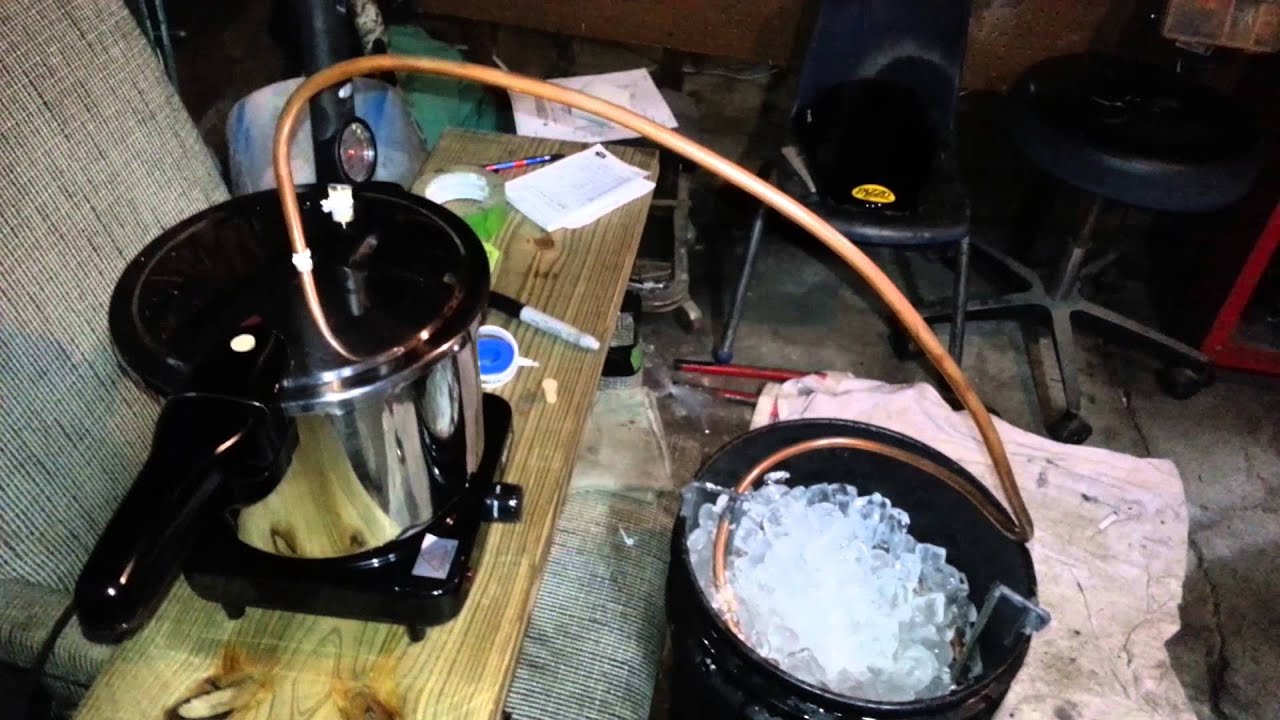
A still has three separate parts - something to heat the liquid, something to help water vapours condense before they escape the apparatus and something to cool and trap the alcoholic vapours. If you're reading this, I assume you are interested in the theoretical transformation of a relatively weak alcoholic mixture into a relatively strong alcoholic mixture. The grains need to be crushed to make it easier to extract starches, sugars, and enzymes during the mashing process. While it is possible to buy pre-crushed grains, many amateur whisky makers prefer to crush the grains themselves.
This has led more whisky drinkers to wonder if they could also start making whisky — after all, it only contains three ingredients . You’ll be happy to discover that making whisky is a fairly simple process, which I’ll share in this post. Making cuts is an important part of distilling that lets you keep only what you need and discard any non-consumable liquid.
Add Some Character To Your Bourbon In The Still
As stated before, my personal experience with brandies is 3-5% of total distillate is methanol/other lower-boiling point compounds. I used to do a lot of sugar mashes, and even then I collected 1-2% the final volume of these lower temperature fractions. "" I'm assuming this is a snide remark at my expense. I guess pointing out the biochemistry and science behind it was the wrong way to go. And here I thought it would resonate with someone who claims a scientific background. You can call it what you want - 'trace amounts' or whatever, it doesn't change the fact they are in there.

At this point, you have finished making a great corn whiskey. It’s imperative to dilute the spirit with plain water to make it smoother. Start pouring a small amount until you reach the ratio you prefer. When there’s a yeast cake formed on top of the water, it’s working. The rapid fermentation process will begin as soon as the yeast is added to the moonshine mash. The use of copper stills is permitted for a number of “legal purposes” – starting with decoration and distilling water or non-alcoholic matter.
Pour the cooled solution into a home brew fermenter. The yeast should be diluted according to manufacturer instructions then added to the fermenter. After 90 minutes, rapidly cool the contents of the mash by placing it in a cold bath. Your goal is to drop the temperature of the mash to below 25°C as quickly as possible. Early American settlers switched from barley to rye because rye was much more common.

To prep a barrel to be used for aging, make sure to first fill it with warm water and leave it sit until the wood swells enough to prevent leaking between the staves. The hydration process could take anywhere from a few hours to a few days. It’s very important that you do this to prevent your spirits from leaking out of the barrel when you initially fill it. Once hydrated, drain the water then fill it with clear, un-aged store-bought whiskey and leave it sit for a couple of weeks. Remember, it’s illegal to distill your own alcohol for consumption without a distilled spirits permit. But no need to fret, there are plenty of un-aged whiskey options to be found at any liquor store.
Adding rye to a mash imparts spicy flavours and a dry mouthfeel. If you don’t use a well-maintained still, there is a risk of a blockage occurring, which can cause alcoholic vapours to leave the still and be ignited. There has been a recent surge in the popularity of craft whisky in the past few years. Many of these small batch whiskies are made by small distilleries with a handful of employees. Distilling your whiskey requires careful monitoring from your side. This is where you’ll be making cuts because you don’t want to bottle any harmful chemicals, assuming it’s whiskey.
So while you can make beer and wine for your own consumption, distilled spirits are still a federal crime. Or, drink it straight to really appreciate your hard work. What you’ve just made is actually considered bourbon, a variety of whiskey made with at least 51% corn mash. Or at least, it’ll be bourbon so long as you age it in a charred oak barrel and bottle it at 40% ABV, and don’t add anything to it during fermenting and distilling. Moonshiners, bootleggers, rum-runners, home distillers—whichever name they go by, people have been making their own whiskey at home for quite some time. It’s a highly rewarding process that leaves you with your very own, hand-crafted hooch to hoard and imbibe at your discretion.



No comments:
Post a Comment